When God Has Forgiven You
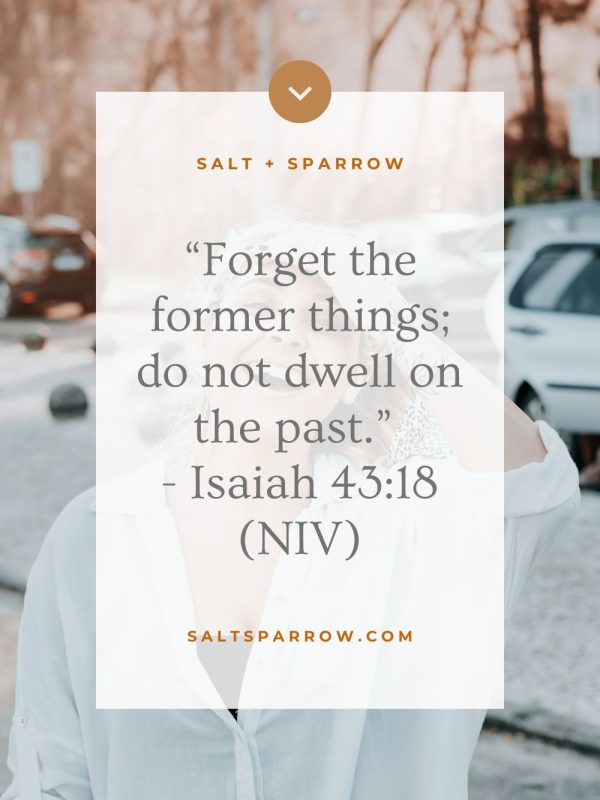
“Forget the former things; do not dwell on the past.” - Isaiah 43:18 (NIV)
When we read this verse, it sounds comforting. That is, until we realize how hard it can be to live it out. Many of us want to move forward, but we’re still tied to our past. We remember decisions we regret, words we wish we could take back, and seasons of our lives we would rather forget.
Often, when we talk about forgiveness, we focus on forgiving other people. But there’s another kind of forgiveness that can be much more difficult: forgiving ourselves.
For many women, forgiving others feels possible, but self-forgiveness feels out of reach. We know our stories too well. We replay the details. And shame quietly convinces us that while God may forgive everyone else, our situation is different.
But Scripture tells a different story.
Psalm 103:12 (NIV) says, “As far as the east is from the west, so far has he removed our transgressions from us.”
I want you to picture a globe. North and south eventually meet. East and west never do. That is how God’s forgiveness works. It doesn’t reverse direction. Once He forgives, He does not circle back.
Still, the Father of Lies works hard to convince us otherwise. He whispers that our sin is too great, too messy, too permanent. His goal is to keep us bound and stuck looking backward instead of walking forward into what God has for us.
But Solomon reminds us in Ecclesiastes that “there is nothing new under the sun.” Sin didn’t surprise God. Your story didn’t catch Him off guard. Christians have been failing forward since the beginning, and God’s grace has always met us there.
But freedom begins with confession. 1 John 1:9 (NIV) tells us, “If we confess our sins, he is faithful and just and will forgive us our sins and purify us from all unrighteousness.”
Notice the emphasis: God’s faithfulness, not our failure. When God forgives, He does so fully.
Forgiving yourself, then, becomes an act of faith. If God has forgiven you, continuing to condemn yourself is not humility, it’s disbelief.
It’s choosing to trust your feelings over God’s truth. But forgiving yourself means aligning your heart with God’s truth instead of your feelings. It means choosing faith over self-punishment.
Isaiah reminds us that we are clay and God is the Potter. Cracked and broken as we may be, the Master Potter does not discard His work. He reshapes it. Because the truth is, God still uses broken vessels. Your past does not cancel your calling.
So, stop rehearsing what God has already released. Fix your eyes on Jesus. Let His grace be louder than your regret.
You are forgiven. Now live like it.
Related Reading:
- Some Things You Just Can’t Forgive
- Today’s a Good Day to Forgive
- Forgive Seventy Times Seven: Do the Math
- 5 Simple Steps to Forgiveness
- Forgiving What You Can’t Forget: Discover How to Move On, Make Peace with Painful Memories, and Create a Life That’s Beautiful Again
Pin this for later…